























Logo

Building Condition Assessment

Property Evaluation

Assess Today, Secure Tomorrow

A Building Condition Assessment (BCA) is a systematic process of evaluating the physical condition of a building and its components to determine current performance, identify deficiencies and estimate future costs.

Key Reasons

Why it matters

Safety Assurance

Ensures safety of occupants and the public.

Asset Value Protection

Helps maintain and improve the value of your property.

Cost Optimization

Identifies problems early to reduce major repair costs.

Planning & Budgeting

Supports long-term maintenance and capital planning.

Compliance

Ensures adherence to codes, standards and regulations.
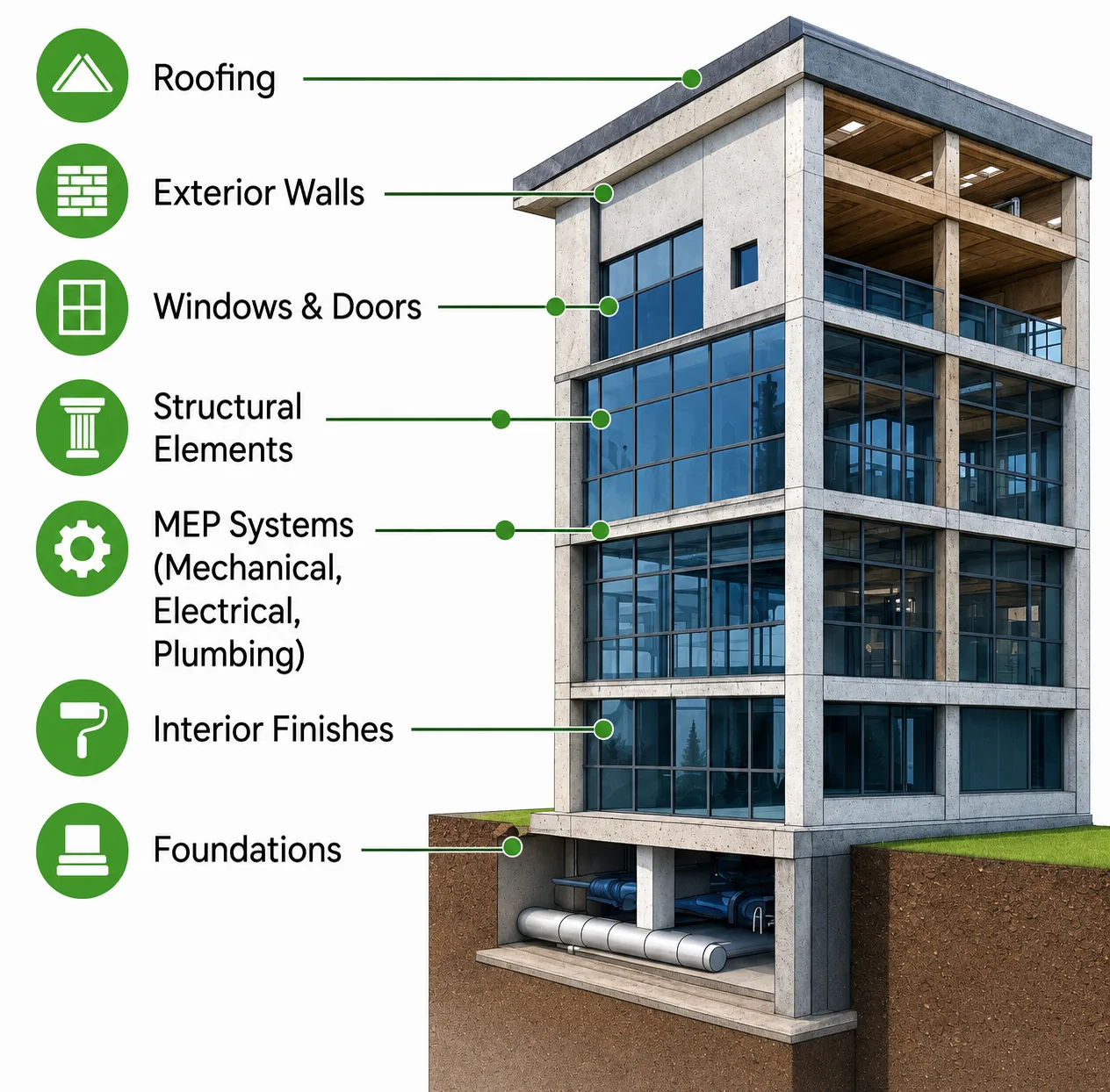
ASSESSMENT SCOPE

What is assessed

Process Overview

The Assessment Process

01

Preparation

Review documents, drawings and history. Define scope and objectives

02

Onsite inspection

Visual inspection and data collection of building components and systems.

03

Evaluation

Assess condition, identify deficiencies and rate remaining life.

04

Analysis & report

Estimate repair/replacement costs and a detailed report with recommendations.

05

Plan & act

Review documents, drawings and history. Define scope and objectives

Process Overview

The Assessment Process

01.

Preparation

Review documents, drawings and history. Define scope and objectives

02.

Onsite inspection

Visual inspection and data collection of building components and systems.

03.

Evaluation

Assess condition, identify deficiencies and rate remaining life.

04.

Analysis & report

Estimate repair/replacement costs and a detailed report with recommendations.

05.

Plan & act

Review documents, drawings and history. Define scope and objectives

What Included

Deliverables

Detailed Condition Report

Photos and Documentation

Cost Estimation and Priority Plan

Maintainance Schedule

Deficiency & Risk Assessment

Recommendations for Improvement


Condition Overview

Condition Rating and Guide

Excellent

80 - 100

Like new condition, no immediate work required.

Good

60 – 79

Minor deficiencies, routine maintenance needed.

Fair

40 – 59

Moderate deterioration, planned repairs recommended.

Poor

20–39

Significant deficiencies, major repairs needed soon.

Critical

0–19

Severe deterioration, immediate action required.